Hover to magnify, click to enlarge
Tang Sancai Horse on Rectangular Base
Tang SancaiPricing depends on size, craft grade and order quantity. Request a quote for your specification.
A sancai horse in the Tang manner, standing four-square on a rectangular base. Made in Luoyang in the low-fired, lead-glazed earthenware the ware is named for, with amber and russet glazes running over a cream body.
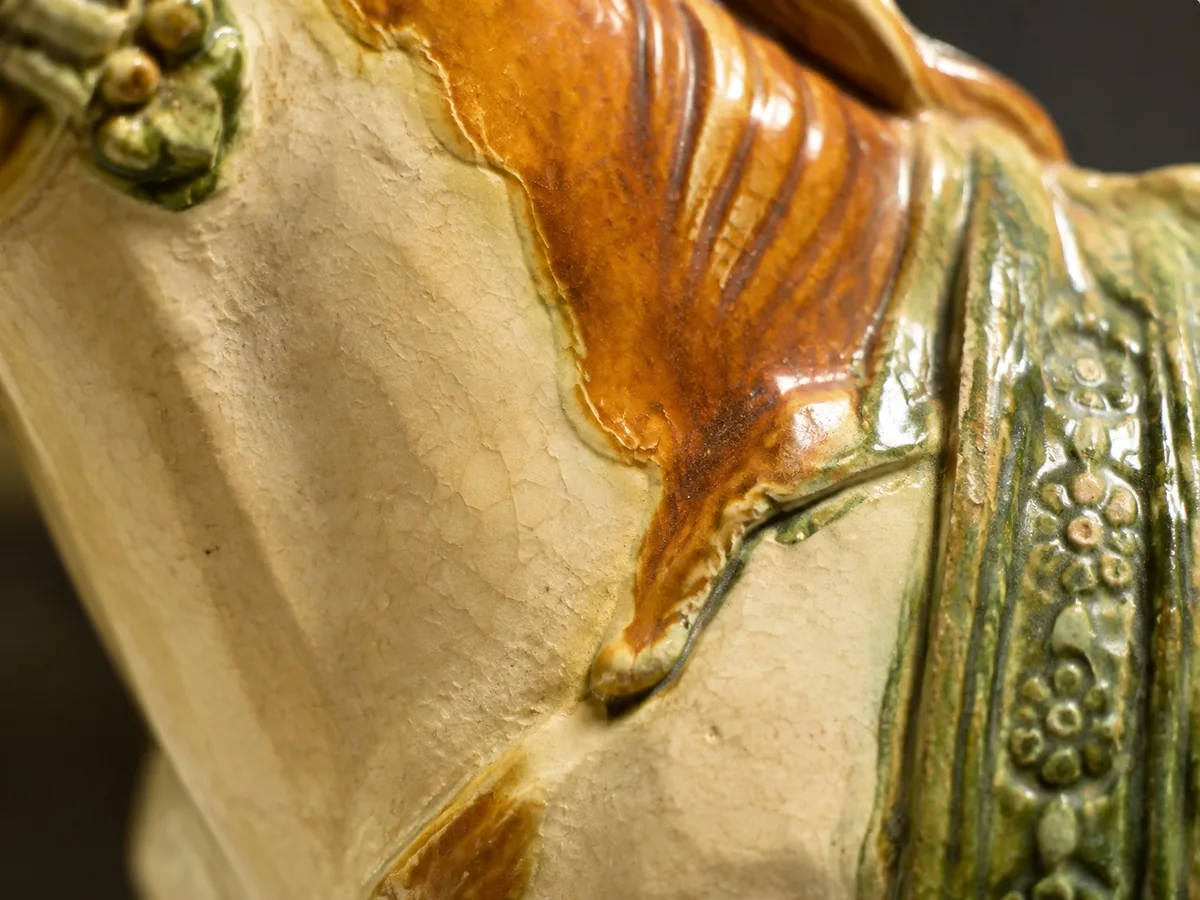
Modelled after Tang horses
The stance, the saddle blanket and the bridle follow surviving Tang figures. We work from excavated references and museum photographs.
Lead-fluxed sancai glaze
A lead-fluxed glaze carrying copper and iron oxides is applied to a low-fired body; in the kiln it melts, runs and pools.
Three colours, run together
Amber, straw and leaf-green. The way they run into one another in the kiln is the point of the ware and cannot be drawn on beforehand.
The glaze decides the surface
Every piece comes out of the kiln with its own glaze break and pooling. A photograph shows what the glaze does; it is not a promise of a flat, even colour.
Product Information
A sancai horse in the Tang manner, standing four-square on a rectangular base. Made in Luoyang in the low-fired, lead-glazed earthenware the ware is named for, with amber and russet glazes running over a cream body.
Features & Specifications
| Origin | Luoyang, Henan, China |
|---|
Craft & Materials
Body and glaze
Sancai is the low-fired, lead-glazed earthenware of the Tang dynasty, named for the way amber, straw and leaf-green glazes run together in the kiln. The body is fired low; the glaze is fluxed with lead, which is what lets it melt and move at a temperature the body can take.
What is done by hand
The technique is deceptively simple to describe and difficult to control. A lead-fluxed glaze carrying copper and iron oxides is applied to a low-fired body. In the kiln it melts, runs and pools — and where it thins, the body shows through. The hand-work is in the form and in reading the glaze before it goes in.
Why no two are identical
Glaze movement is not fully predictable. Two pieces from the same run will differ in where the colour breaks and how far it runs. This is a property of the ware, not a fault — but if you need a set that reads evenly, say so on the enquiry and we will select for it.
Warranty & Support
- Sample before production A sample is made and approved before the run begins.
- Specification agreed in writing Dimensions, finish and grade are confirmed on the quotation.
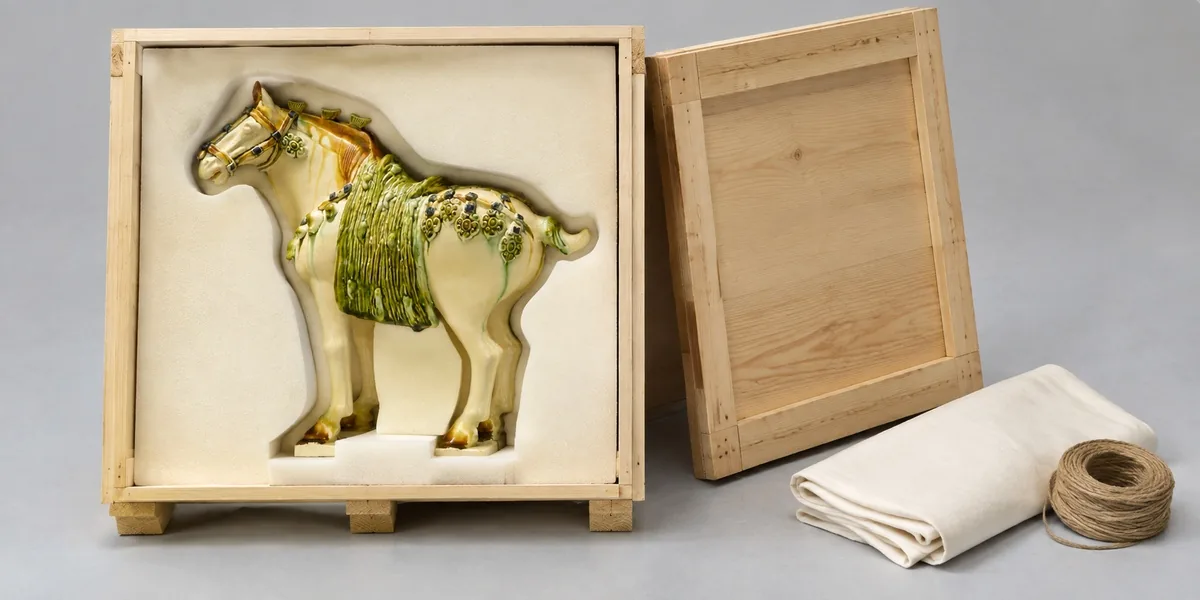
- Packing to the material Ceramic, bronze, silk and hide each ship in their own packing.
- Claims Transit damage is handled per the terms agreed on your order.
Procurement FAQ
Do you sell to individuals?
We supply to businesses, but there is no minimum on a first sample order. Write to us with what you need.
Can I order a sample first?
Yes. A sample is made and approved before the production run.
Is this an excavated piece?
No. Everything is made now, by hand, after historical forms. Nothing on this site is an original.
Can you match a colour or a form?
Yes — send a photograph, a drawing or a reference piece and we will quote it.
What is the minimum order?
It depends on the line, the form and the finish. It is stated on your quotation.
How do you pack ceramics for export?
Export cartons with the padding and separation the material needs. Packing details are confirmed on the order.
Request a quote for this piece
Pricing depends on size, craft grade and order quantity. Request a quote for your specification.
Request a Quote